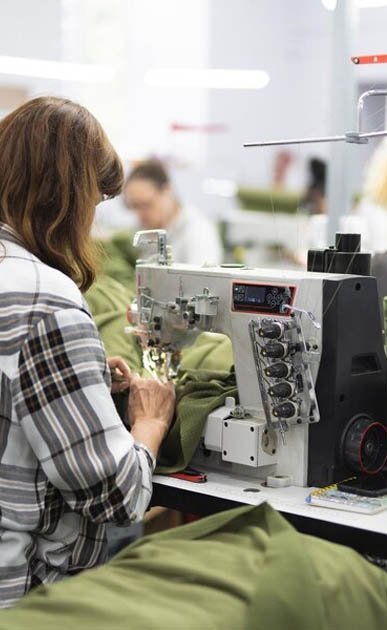

Artificial intelligence (AI) has taken hold in various industries, including the manufacturing sector. This technology is best for streamlining business operations, boosting efficiency and productivity, improving product quality and safety, and achieving scalability and growth.
But how do you go about integrating AI into your manufacturing processes? Read on to find out the answer to this critical question.
The Use of AI in the Manufacturing Industry
For the uninitiated, artificial intelligence is the simulation of human intelligence in modern technologies. This simulation enables digital tools and computer systems to partly think and act like sentient beings with zero-to-minimal human interventions.
Generative AI (GenAI) like ChatGPT, conversational AI like Chatbots, and AI-voiced assistants, such as Alexa and Siri, are popular examples of AI technology. Statista projected the global AI market to grow from $244.22 billion in 2025 to $1.01 trillion by 2030 at a 26.60% compound annual growth rate (CAGR).
The use of AI applies to the manufacturing industry.
Think of AI manufacturing trends in 2025, such as sustainable manufacturing, predictive maintenance, smart manufacturing, additive manufacturing, and supply chain optimization. All these trends are powered by nothing less than AI technology.
According to a recent CapGemini survey, AI implementation in manufacturing revolves around four key areas: Maintenance, quality, piloting, and corporate plans.
About 57% of manufacturing companies prioritize piloting AI technologies through experimentation. However, nearly 30% focus on incorporating AI initiatives into their corporate strategies. Meanwhile, 29% direct their AI implementation towards maintenance and 27% towards quality.
Image source
What specific manufacturing processes require AI integration? Below are the AI use cases:
- Process automation: AI technology can automate various manufacturing functions, from supply chain to inventory and logistics. Not only do they reduce manual work, but AI tools also help accelerate processes.
- Quality control: AI tools can assist your quality assurance (QA) team in monitoring your manufacturing operations. Think of digital twins powered by AI technology, allowing you to identify problem areas early on and fix them almost immediately.
- Warehouse management: AI can optimize your warehouse operations in manufacturing. Consider establishing smart factories powered by AI and the Internet of Things (IoT) and using autonomous robotics, such as smart lifting automation.
- Predictive maintenance: AI technology can monitor your facility and equipment for signs of wear and tear. That way, your team can immediately attend to minor repairs before they escalate to bigger issues.
- Demand forecasting: A subset of AI, machine learning can learn from datasets and make predictions based on patterns or trends. ML-powered tools can help you forecast your material supplies, stock levels, or sales volumes to meet the demands.
- Data analysis and reporting: While 98% of manufacturers report at least one data challenge, about 35% don’t get actionable insights. AI technology can assist in analyzing and reporting data in your manufacturing operations for 99% accuracy.
Image source
Discover the potential benefits of AI in your manufacturing company below.
How AI proves beneficial for your manufacturing business
Companies and organizations across industries are increasingly adopting artificial intelligence (AI) to boost operational efficiency, optimize business processes, and enable scalable growth. In fact, 80% of business leaders already leverage AI for strategic planning and decision-making, and the manufacturing sector is no exception.
Image source
The potential benefits of AI in manufacturing are extensive. Here’s how it can transform your operations:
- Optimized workflow: Integrating AI can streamline manufacturing by automating production based on real-time demand. For example, it can trigger direct-to-garment printing for personalized items like custom t-shirts. This reduces waste and improves responsiveness to consumer trends.
- Improved efficiency: AI improves efficiency and boosts productivity by enabling local manufacturing and shortening the supply chain. It predicts demand, optimizes inventory, and reduces lead times. This results in faster delivery, less waste, and better resource use.
- High-quality products: AI ensures quality products by using computer vision and machine learning to detect defects in real time. It increases consistency and minimizes rework and returns. Over time, it also helps identify and fix recurring production issues.
- Significant cost savings: Although AI implementation requires an initial costly investment, it leads to substantial cost reductions over time. It reduces errors, downtime, and material waste, ultimately lowering operational expenses. Financial planning or debt relief strategies can also support sustainable growth during AI adoption.
- Business scalability: AI makes a business scalable by automating key processes and improving decision-making. It allows manufacturers to grow without a proportional increase in costs. From robotics to data insights, AI helps drive long-term growth and success.
Learn the key steps for implementing AI in manufacturing in the next section.
How Ludyway Can Help with AI Integration in Manufacturing
At Ludyway, we connect brands with American manufacturers that are forward-thinking and ready to embrace innovation—including artificial intelligence. Whether you’re a startup looking to streamline your supply chain or an established company interested in automating your production line, Ludyway can help you find the right factory partners equipped with modern technology and a future-ready mindset. Our platform offers access to a vetted network of manufacturers who understand the evolving landscape of AI in manufacturing. By working with industry experts through Ludyway, brands can integrate smart systems efficiently while maintaining quality, transparency, and speed throughout the process.
How To Integrate AI into Your Manufacturing Processes
The use of AI in manufacturing has been growing and expanding. In fact, its global market is projected to grow from $5.32 billion in 2024 to $47.88 billion by 2030 and expand at a 46.5% CAGR. This market growth and expansion are due to the ongoing implementation of advanced technological innovations.
Image source
As such, leveraging AI technology for your manufacturing operations is best. But how do you integrate this technology into your processes? Here’s how:
1. Assess your infrastructure and identify business needs
The initial step is to examine your current manufacturing operations and determine your business needs. This allows you to identify operational bottlenecks and fix certain processes. The ultimate goal is to grow your manufacturing business and attract more clients.
Take the crucial steps below:
- Examine your existing infrastructure. Start by checking the technologies, tools, and resources used for your manufacturing operations. Are they modern or outdated? Do they drive process efficiency, data accuracy, and product quality? If the answers are no, you can proceed to the next step.
- Discover some areas for improvement. Think of challenges, such as rising production costs, supply chain disruptions, workforce shortages, quality control issues, and equipment downtime. How will your AI investment help address all these manufacturing issues?
2. Determine AI use cases and select the right tools
After assessing your infrastructure and identifying business needs, you can study how technology can help. The use of AI in your various manufacturing processes can be a game-changer. That’s why over three-quarters (77%) of businesses have begun leveraging or experimenting with this technology.
Image source
Here’s what you need to do:
- Identify use cases of AI. Study how AI-powered tools and platforms can improve your manufacturing functions. Consider its technological leverage for process automation, quality control, warehouse management, predictive maintenance, business forecasting and reporting, and contract management software.
- Pick AI tools and a partner. By listing the AI applications in your manufacturing operations, you can shop around for AI-powered tools or platforms best suited for your business needs. Likewise, look for an AI service provider that can offer you the best value for your manufacturing needs.
Take it from Peter Čuček, Owner at Tuuli, who has begun investing in AI for a wide range of wood products. He’s seen how this technology has helped cover various aspects of their manufacturing processes. “AI is helping us improve everything from material planning to product quality.”
Čuček explains, “We’ve started using it to automate routine tasks, reduce waste products, and make better use of our wood resources. It even allows us to strike a balance between scalability and sustainability in our business. As we continue investing in AI, we see more opportunities to innovate across our manufacturing process.”
3. Build a cross-functional team and train your workforce
At this point, you need a core team for your AI implementation. They are responsible for the AI planning and design, deployment, and integration with your systems, as well as performance monitoring and optimization. Likewise, you need to get your entire team involved in this implementation later on in the process.
Take note of the following:
- Establishing the core team: Your team should consist of operational leaders, information technology (IT) personnel, and data scientists. Bring all these stakeholders together to align business goals, share valuable insights, ensure smooth integration, and promote sustainable operations.
- Training the workforce: It’s also crucial to orient your employees about using AI in the manufacturing processes. Introduce them to this advanced technology and teach them how to use it initially. Then, train your team members on the updated workflows with the AI integration later in the process.
4. Integrate AI into systems and run a pilot project
Now, this is the most critical part of the overall equation—the actual AI integration with your existing infrastructure. This requires you to test the feasibility, effectiveness, and potential outcomes of your AI implementation. Note that many companies in the manufacturing sector are already experimenting with AI, potentially gaining $3.78 trillion by 2035.
Image source
Take the following key steps:
- AI integration: The deployment process can be complex, especially when using legacy systems for manufacturing operations. However, your IT team and service provider should collaborate to ensure a successful integration.
- Pilot testing: Once the AI systems have been deployed, you must test their performance to see if they work. Consider key factors such as system compatibility, data accessibility, platform reliability, process efficiency, and business scalability.
Case in point: Consider digital innovation for apparel factories.
By integrating AI with their inventory and production systems, many apparel manufacturers now use real-time data to automate order processing, personalize designs, and manage supply chains more efficiently. However, running pilot projects in these settings has helped companies fine-tune their systems before scaling AI across their entire operations.
5. Monitor, evaluate, and optimize your processes
Finally, the AI tools and platforms have been successfully integrated into your systems. AI has been incorporated into your new manufacturing workflows. Most importantly, the workforce has been trained to leverage AI technology and follow the new processes.
However, after the AI integration and pilot testing, the AI initiative doesn’t stop. You must also take the following crucial steps:
- Performance monitoring involves tracking how well the AI system performs after integration. Manufacturers can monitor metrics like production speed, error rates, and downtime to measure impact. Regular reviews help ensure the AI continues delivering value.
- Workflow evaluation: Workflow evaluation checks how AI fits into and affects daily operations. It helps identify any bottlenecks, redundancies, or disruptions caused by the new system. This step ensures smoother coordination between human workers and AI tools.
- Process optimization: AI can analyze large sets of operational data to suggest improvements. It helps fine-tune processes for greater efficiency, better quality, and reduced waste. Over time, optimization leads to faster production and lower costs.
Learn from Stanislav Khilobochenko, VP of Customer Services at MacKeeper, who recommends performance monitoring and process optimization for AI implementation. This allows the company to maximize AI potential and improve business operations. “In the manufacturing industry, AI automation has permeated several areas of our industry.”
Khilobochenko shares, “One of the most influential improvements we have seen is AI-driven diagnostics that can predict potential equipment failures. This allows for proactive maintenance and ensures that we’re able to minimize downtime. This not only improves operational efficiency but also significantly enhances customer satisfaction.”
Khilobochenko concludes, “Beyond that, it provides us with peace of mind knowing that operationally things are working well.”
Final Thoughts: Harnessing the AI Power for Manufacturing Success
There’s no denying the applications of AI in various industries, including the manufacturing sector. AI technology can be used for process automation, quality control, and warehouse management. It can also be utilized for predictive maintenance, demand forecasting, and data analysis and reporting.
As a manufacturing business, follow our crucial steps for integrating AI into your processes. For one, it can streamline your manufacturing workflows while helping your company save money in the long term. Not only does it boost your efficiency and productivity, but it also ensures product quality and safety.
Ultimately, AI technology helps you achieve scalability and growth for your manufacturing business! Ready to harness the AI power for your manufacturing operations? Leverage Ludyway’s AI-powered platform designed for both brands and manufacturers.
Start your factory free trial today!